Showing posts with label Famous Pipe Smoking Entertainers. Show all posts

Monday, June 30, 2008

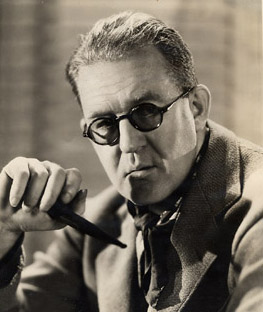
John Ford, Director

John Ford was an Academy Award-winning American film director of Irish heritage famous for both his westerns such as Stagecoach and The Searchers and adaptations of such classic 20th-century American novels as The Grapes of Wrath. His four Best Director Academy Awards (1935, 1940, 1941, 1952) is a record still unmatched, although only one of those films, How Green Was My Valley, won Best Picture.

His style of film-making has been tremendously influential. Ford is a pioneer of location shooting and the extreme long shot which frames his characters against a vast, harsh and rugged natural terrain.

Ford died August 31, 1973 in Palm Desert, California, at the age of 78 from stomach cancer.
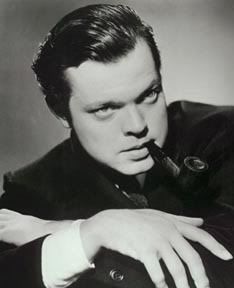
Orson Welles

George Orson Welles was an Academy Award-winning American director, writer, actor and producer for film, stage, radio and television. Welles first gained wide notoriety for his October 30, 1938, radio broadcast of H. G. Wells' The War of the Worlds. Adapted to sound like a contemporary news broadcast, it caused a number of listeners to panic. In the mid-1930s, his New York theatre adaptations of an all-black voodoo Macbeth and a contemporary allegorical Julius Caesar became legendary. Welles was also an accomplished magician, starring in troop variety spectacles in the war years. During this period he became a serious political activist and commentator through journalism, radio and public appearances closely associated with Franklin D. Roosevelt. In 1941, he co-wrote, directed, produced and starred in Citizen Kane, often chosen in polls of film critics as the greatest film ever made.

He died of a myocardial infarction at his home in Hollywood, California, at the age of 70, on October 10, 1985.

Sunday, June 29, 2008

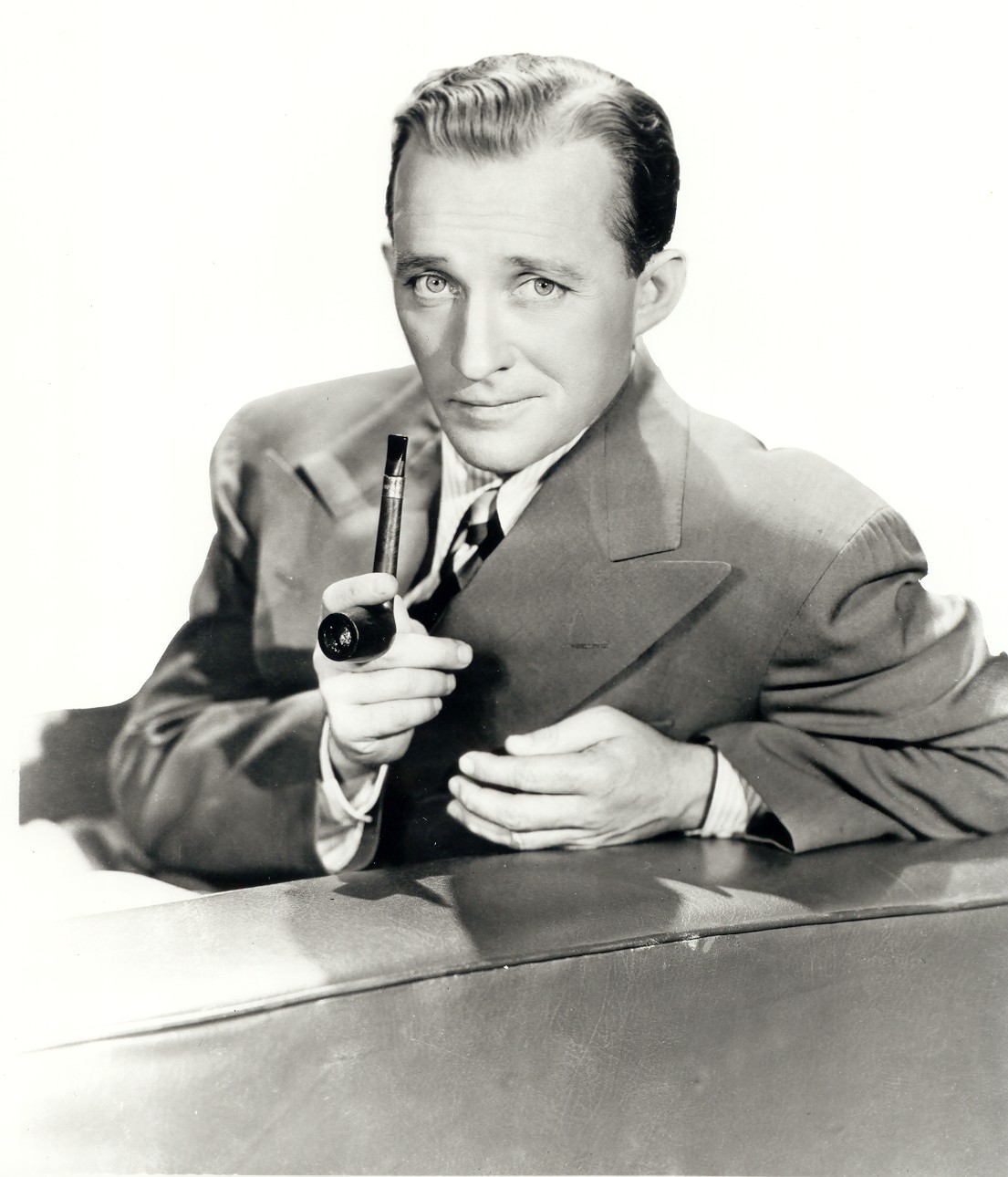
Bing Crosby, The Ultimate Crooner


Harry Lillis “Bing” Crosby was an American popular singer and actor whose career lasted from 1926 until his death.

One of the first multimedia stars, from 1934 to 1954 Bing Crosby held a nearly unrivaled command of record sales, radio ratings, and motion picture grosses. He is cited among the most popular musical acts in history and is currently the most electronically recorded human voice in history. Yank magazine recognized Crosby as the person who had done the most for American G.I. morale during World War II and, during his peak years, around 1948, polls declared him the "most admired man alive." During 1948, the Music Digest estimated that Crosby recordings filled more than half of the 80,000 weekly hours allocated to recorded radio music.

Crosby exerted an important influence on the development of the postwar recording industry. In 1947, he invested US$50,000 in the Ampex company, which developed the world's first commercial reel-to-reel tape recorder, and Crosby became the first performer to pre-record his radio shows and master his commercial recordings on magnetic tape.

1962, Crosby was the first person to receive the Grammy Lifetime Achievement Award.

Crosby smoked two packs of cigarettes a day until his second wife made him stop. He finally quit smoking his pipe and cigars following lung surgery in 1974

Shortly after 6:00 p.m. on October 14, 1977, Crosby died suddenly from a massive heart attack after a round of eighteen holes of golf near Madrid where he and his Spanish golfing partner had just defeated their two opponents.

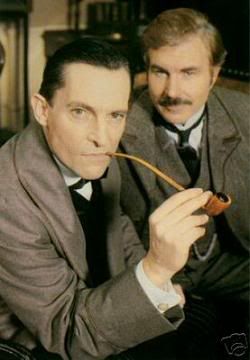
Jeremy Brett


Jeremy Brett, born Peter Jeremy William Huggins, was an English actor famous, among other things, for his portrayal of the detective Sherlock Holmes in four British television series: The Adventures of Sherlock Holmes, The Return of Sherlock Holmes, The Casebook of Sherlock Holmes, and The Memoirs of Sherlock Holmes.

During the last decade of his life, Brett was treated in hospital several times for his mental illness, and his health and appearance visibly deteriorated by the time he completed the later episodes of the Sherlock Holmes series.

There were plans to film all the Holmes stories, but Brett died of heart failure at his London home before the project could be completed. Brett's heart had been damaged by a childhood case of rheumatic fever and was apparently further weakened by his heavy smoking. In an interview, Edward Hardwicke claimed that Brett would buy 60 cigarettes on his way to the set and smoke them all throughout the day. After his heart problem was diagnosed, Brett reportedly quit smoking for a short while, but began smoking again shortly before his death at the age of 61 on 12 September 1995.

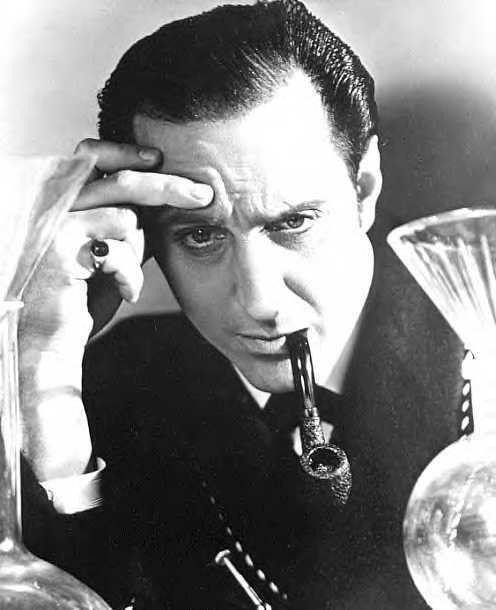
Basil Rathbone, The Great Sherlock Holmes

Basil Rathbone was a British actor most famous for his portrayal of Sherlock Holmes. Only two actors have done justice to the portrayal of Sherlock Holmes, the first Rathbone and the other Jeremy Brett. Rathbone is most widely recognized for his starring role as Sherlock Holmes in fourteen movies between 1939 and 1946, all of which co-starred Nigel Bruce as Dr. Watson. The first two films, The Adventures of Sherlock Holmes and The Hound of the Baskervilles were set in the late-Victorian times of the original stories. Later installments beginning with Sherlock Holmes and the Voice of Terror, were set in contemporary times, and some had World War II-related plots. Rathbone and Bruce also reprised their film roles in a radio series, The New Adventures of Sherlock Holmes.

Basil Rathbone died of a heart attack in New York City in 1967 at age 75.